





Most Caribbean coral reefs may disappear in the next 20 years, if something isn’t done, a new report warns.
Caribbean corals have declined by more than 50% since the 1970s. But the good news is that the trend can be reversed. Restoring parrotfish populations and improving other management strategies, such as protection from overfishing and excessive coastal pollution, could help the reefs recover and make them more resilient to future climate change impacts. So says the report, Status and Trends of Caribbean Coral Reefs: 1970-2012, which is the result of the work of 90 experts over the course of three years. It contains the analysis of more than 35,000 surveys conducted at 90 Caribbean locations since 1970, including studies of corals, seaweeds, grazing sea urchins and fish.
The main problem faced by the reefs is the loss of grazers, like parrotfish in the region. Climate change, which has long been blamed for coral degradation does pose a serious threat by making oceans more acidic and causing coral bleaching, but the report shows that the loss of parrotfish and sea urchins has, in fact, been the key driver of coral decline in the Caribbean.
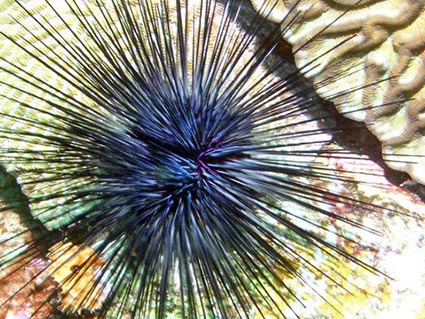
Sea Urchin
Disease led to mass mortality of the sea urchin in 1983 whilst over-fishing has brought the parrotfish population to the brink of extinction in some places. The loss of these species allows algae, on which they feed, to smother the reefs.
“Even if we could somehow make climate change disappear tomorrow, these reefs would continue their decline,” says Jeremy Jackson, lead author of the report. “We must immediately address the grazing problem for the reefs to stand any chance of surviving future climate shifts.”
 Image: Gerard Lacz/Deposit photos
The report also shows that some of the healthiest Caribbean coral reefs are those that harbour vigorous populations of grazing parrotfish. These include the Flower Garden Banks National Marine Sanctuary in the northern Gulf of Mexico, Bermuda and Bonaire, all of which have restricted or banned fishing practices that harm parrotfish, such as fish traps and spearfishing. Other countries are following suit.
Local decisions and actions can make a big difference to the reefs. Bermuda, for example, has 39% coral cover whilst most areas have less than 14%.
Reefs where parrotfish are not protected have suffered tragic declines, including Jamaica, the entire Florida Reef Tract from Miami to Key West, and the U.S. Virgin Islands.
“The rate at which the Caribbean corals have been declining is truly alarming,” says Carl Gustaf Lundin, Director of IUCN’s Global Marine and Polar Programme. “But this study brings some very encouraging news: the fate of Caribbean corals is not beyond our control and there are some very concrete steps that we can take to help them recover.”

Healthy Coral, photo credit: Tim Nicholson
The authors also looked at the impact of invasive species like lionfish, but concluded that although they have “wreaked havoc in Caribbean fish communities…they pale in comparison to the introduction of the unidentified pathogen that caused the die-off of Diadema antillarum or the effects of “White-band disease” on acroporid corals.”
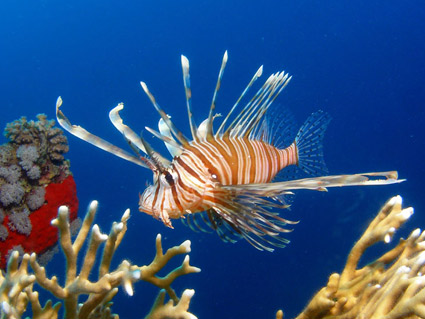
Lionfish, photo credit: Tim Nicholson
The authors of the report recommend adopting conservation and fisheries management strategies that lead to the restoration of parrotfish populations and so restore the balance between algae and coral.
Further Reading:
Status and Trends of Caribbean Coral Reefs: 1970-2012
Image credits:
- parrotfish-dp: Gerard Lacz/Deposit photos


