





September brings prime diving conditions to the Canary Islands. Summer crowds begin to thin, but the Atlantic is still warm. Generally settled conditions open up everything from shallow lava reefs to deeper volcanic walls, and each island reveals a different underwater character. In Tenerife, you may photograph a stingray gliding across the reef. Lanzarote brings volcanic formations into focus, Gran Canaria offers the chance to look for angel sharks, and quieter La Palma delivers dramatic reef scenery. Here is how to choose the island that fits your September dive trip.
Tenerife: The All-Rounder
Tenerife makes a diving holiday easy, with good infrastructure and an underwater landscape that changes noticeably from site to site. In September, water temperatures can reach around 24°C (75°F), making a 3-5 mm wetsuit comfortable for most divers. Visibility often reaches 15-30 meters (49-98 feet), opening clear views across the volcanic terrain, although local conditions vary.
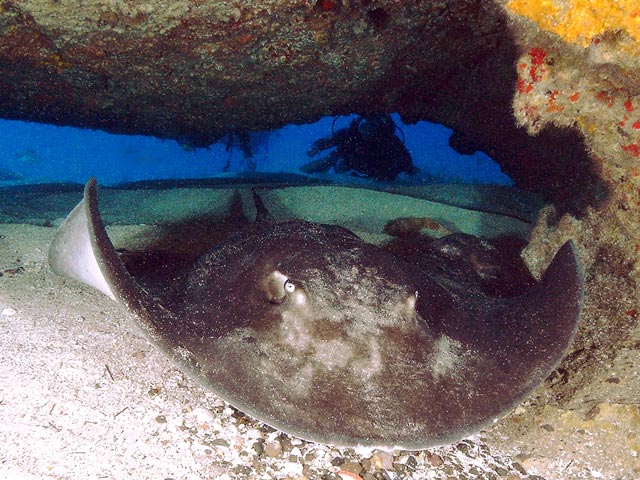
Lava rock shapes swim-throughs, walls, caves, and rugged reefs, turning each dive into a route through Tenerife’s volcanic past. Along the south, stingrays may glide across the reef alongside turtles, moray eels, barracuda, and large schools of fish. Protected sections of the southern coastline can feel calm and approachable for newer divers. Deeper sites and volcanic structures give experienced divers more challenging terrain to explore.
Tenerife gives divers a great variety without complicated logistics. It also works well for families or mixed groups where some people want to dive and others prefer hiking, beaches, or sightseeing. In September, you can spend the morning diving over lava reefs and the afternoon exploring Tenerife’s volcanic interior.
Lanzarote: Dramatic Volcanic Diving
Choose Lanzarote if the geology is as much a draw as the marine life. The volcanic landscape above water seems to continue straight beneath the surface, where lava formations, arches, caverns, rocky walls, and black seabeds make the underwater scenery feel like an extension of the island itself.
September brings water temperatures of roughly 23-24°C (73-75°F), and visibility can reach around 20-30 meters (66-98 feet) when conditions are favorable. Groupers, moray eels, wrasse, rays, octopus, barracuda, and smaller reef species move through this stark setting.
Around Playa Chica in Puerto del Carmen, several sites are easy to reach. More experienced divers can head toward deeper lava formations and areas shaped by stronger currents. It appeals to photographers and divers who enjoy reading the landscape as much as watching the marine life.
Take time to explore the island between dives. Lanzarote’s volcanic scenery continues the story above water, and Timanfaya National Park offers another view of the geological forces that shaped the reefs below.
Gran Canaria: Marine Life and Easy Access
Gran Canaria keeps dive logistics simple, with many sites clustered along the southern coast. In September, sea temperatures often sit around 23-24°C (73-75°F), and calm conditions can open visibility to 20 meters (66 feet) or more.
For marine-life photographers, there is often something happening just ahead of the lens. Stingrays and angel sharks may come into view, and moray eels or octopus tuck into cracks and overhangs in the volcanic reef. Barracuda and schools of smaller fish bring movement into the blue. Some sites stay relatively shallow for newer divers, and deeper reefs and walls offer more demanding options.

Gran Canaria also makes it easy to enjoy the time between dives. Once the gear is rinsed, restaurants, beaches, and nightlife keep the day going for travelers who want more from their trip than just diving.
For photographers, the SSI Perfect Buoyancy Specialty can help when the camera comes out. Good trim and steady buoyancy let you hold your position, watch shy animals, and frame a photograph without stirring up the seabed or touching the reef.
Fuerteventura: Wild Coastlines and Encounters
Fuerteventura may bring long beaches and surfing to mind first, but the island has another side once you drop below the surface. Its exposed coastline can make conditions more changeable, yet sheltered sites often feel calmer in September when Atlantic weather is generally favourable.
 Image: Unsplash
Water temperatures sit around 22-24°C (72-75°F), with visibility often reaching 15-25 meters (49-82 feet). Around the volcanic rock formations, morays, groupers, wrasse, rays, barracuda, and other Atlantic species bring the rugged underwater landscape to life.
Fuerteventura is a good match for divers who like quieter surroundings and want to mix diving with outdoor adventures. Confident recreational divers who can adapt to changing conditions will feel more at home here than those expecting the consistently sheltered diving found at certain Tenerife sites.
If you are planning several dives, keep an eye on the forecast. Wind direction can change the character of a site from one day to the next, so keep a few options open.
La Palma: For Underwater Landscapes
La Palma feels wilder and more adventurous for divers drawn to dramatic volcanic scenery and a less developed atmosphere. The island’s steep terrain seems to continue past the shoreline, extending underwater into walls, drop-offs, caves, and unusual lava formations.
September brings warm Atlantic water and favorable summer conditions for exploring the coastline. Water temperatures can reach approximately 23-24°C (73-75°F), and visibility is often around 15-30 meters (49-98 feet), opening up clear views across the volcanic terrain.
Morays, groupers, rays, octopus, barracuda, and abundant reef fish move through the scene, but the landscape often steals the show. Experienced divers and underwater photographers can enjoy exploring walls and lava formations rather than chasing larger animals. For deeper drop-offs, the SSI Deep Diving training can help prepare you for the planning and depth awareness deeper recreational dives require.
La Palma is just as rewarding once the fins come off. Hiking trails wind through volcanic landscapes, forests, and dramatic coastal terrain, making diving only one part of an active island adventure.
El Hierro: The Quiet Choice
If you want to leave the busier tourist islands behind, El Hierro changes the pace immediately. Its remote setting and volcanic coastline give the diving a quieter, more elemental feel, with steep underwater terrain and exceptionally clear Atlantic water when conditions line up.

September water temperatures can reach around 23-24°C (73-75°F), and visibility sometimes exceeds 30 meters (98 feet). In that clear water, volcanic walls, lava formations, caves, and drop-offs can unfold far into the blue.
Groupers, morays, rays, barracuda, turtles, and large schools of fish move through this volcanic setting. For experienced divers, the mix of clear water, dramatic terrain, and fewer distractions is exactly what makes El Hierro so appealing.
That remoteness does require planning. Transport and accommodation are more limited than on Tenerife or Gran Canaria, so booking ahead is well worth doing, especially around popular travel periods.
Which Canary Island Should You Choose?
The beauty of diving the Canary Islands is how different each island feels once you get underwater. Tenerife offers the widest mix, Lanzarote puts volcanic scenery front and centre, Gran Canaria combines easy access with abundant marine life, and Fuerteventura appeals to travellers who want diving and outdoor adventure in the same trip. La Palma draws you in with dramatic underwater landscapes, and El Hierro is the place to slow down, leave the crowds behind, and dive into remarkably clear Atlantic water.
By September, the busiest summer weeks are easing, but the cooler months are still ahead. The water remains warm, conditions are often favorable, and long days leave enough time for several dives and exploring the islands above the surface.
Whichever island you choose, check local conditions before every dive and match your site selection to your experience level. If your trip includes deeper dives, stronger currents, or fragile reef environments, training such as SSI’s Deep Diving, the SSI Waves, Tides & Currents Specialty, or SSI’s Perfect Buoyancy can help you arrive better prepared. With the right preparation, you can settle into the dive and take in the lava walls, clear blue water, and volcanic scenery that make the Canary Islands so memorable underwater.
Image credits:
- Fuerteventura: Unsplash


