





As divers, we’re lucky to witness the underwater world in all its color, complexity, and fragility. But we are also some of the first to notice when something is out of balance. Invasive species—non-native animals or plants that spread rapidly and disrupt ecosystems—are a growing threat to ocean health. The good news? Divers around the world are stepping up to help, and their efforts are making a real difference.
From lionfish roundups to kelp-clearing dives, the diving community is proving that marine conservation isn’t just for scientists or big organizations—it’s something all of us can be part of, one dive at a time.
What Are Invasive Species and Why Do They Matter?
Invasive species are organisms that don’t naturally belong in a particular ecosystem. They’re often introduced by ships, aquarium releases, or accidental transport, and once established, they can take over ecosystems. These species tend to outcompete native ones, upset food webs, and damage habitats.
Some of the most problematic marine invaders include:
- Lionfish in the Atlantic and Caribbean
- Crown-of-thorns starfish in the Pacific
- Caulerpa taxifolia (aka killer algae) in the Mediterranean
- Undaria pinnatifida (Japanese kelp) in Australia and New Zealand
- European green crabs in North America and Canada
Once these invaders gain a foothold, they can spread quickly and disrupt local ecosystems.

Divers on the Frontline
Because so much of the marine environment is difficult to access from land or by boat, divers are playing a critical role in tackling invasive species. Their first-hand knowledge of underwater environments—and ability to access hard-to-reach areas—makes them ideal conservation allies.
1. Lionfish Patrols in the Caribbean
One of the most visible and successful diver-led initiatives is the fight against invasive lionfish in the Atlantic and Caribbean. Native to the Indo-Pacific, lionfish were introduced—likely through the aquarium trade—in the 1980s. Since then, their population has surged.
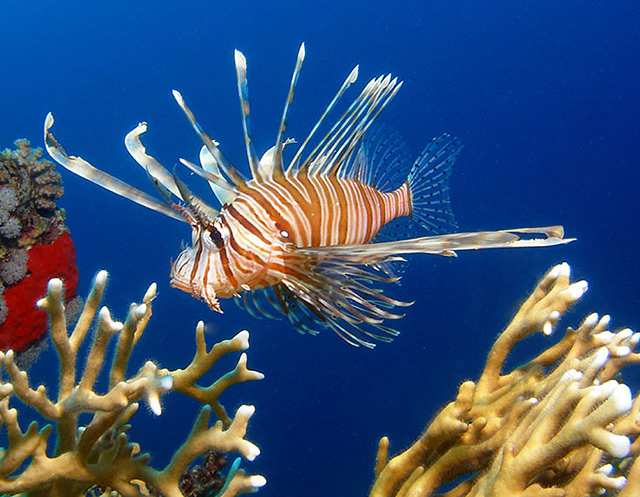
Each female lionfish can produce up to 2 million eggs per year, spread out over multiple spawning events. They consume huge numbers of small reef fish and crustaceans, and local predators don’t recognize them as prey. The result? Reef systems are thrown out of balance.
Divers across the region are responding. Through lionfish derbies, volunteer programs, and guided removal dives, they’re helping to keep populations under control. The fish are often turned into fillets or ceviche, and some communities even make jewelry from their spines—creating a small-scale conservation economy.
In places like Belize, Cozumel, and the Bahamas, these efforts have curbed local lionfish densities and inspired a whole new generation of eco-conscious divers.
2. Crown-of-Thorns Starfish Control
Crown-of-thorns starfish (Acanthaster planci) are native to the Indo-Pacific but can become highly destructive during population booms. A single adult can consume up to 10 square meters of coral per year, making them a major threat to coral reefs like the Great Barrier Reef.
To combat outbreaks, divers are trained to inject the starfish with bile salts or vinegar—a targeted method that doesn’t harm surrounding marine life. In areas like the Philippines, Indonesia, and Australia, these diver-led interventions are essential to reef survival during outbreak years.
On the Great Barrier Reef alone, thousands of crown-of-thorns have been removed as part of long-term management efforts.
 Image: Warren Baverstock/Ocean Image Bank
3. Removing Invasive Algae
In the Mediterranean, Caulerpa taxifolia has smothered seafloors since it was accidentally released from an aquarium in the 1980s. The algae spreads rapidly, smothering native seagrasses and kelp and reducing biodiversity. Though removal is painstaking, divers working alongside scientists have helped restore sections of the affected seafloor by carefully bagging and removing the algae by hand.
In Australia and New Zealand, divers also remove Undaria pinnatifida (Japanese kelp), which competes with native kelp species. Manual removal combined with careful disposal is a key part of managing the spread in local marine reserves.

4. Citizen Science and Monitoring
Not all contributions involve physically removing invasive species. Many divers are helping by recording sightings and monitoring ecosystems, providing valuable data for scientists and environmental managers.
Through platforms like REEF, iNaturalist, and the MySSI app, divers can log species observations, upload photos, and track changes in local ecosystems. In New Zealand, for instance, regular reports from divers help detect early signs of invasive sea squirts and fanworms—allowing for faster intervention.
The recent integration of SCUBAPRO’s LogTRAK with the MySSI app makes it easier than ever to log dive data and species encounters digitally, giving divers a more seamless way to contribute to conservation efforts.

How to Get Involved
Want to make a difference on your next dive? Here are a few ways to get involved:
- Take an ecology course – SSI’s Marine Ecology, Fish Identification, and other environmental specialty courses teach you to recognize species and understand how ecosystems function.
- Join a local removal program – Ask your local dive centre if they offer lionfish hunts, crown-of-thorns starfish control, or algae cleanups.
- Log what you see – Whether it’s a GoPro clip or a photo of a suspicious sponge, your observation could help researchers. Use apps like MySSI to store and share your dive logs.
- Choose eco-friendly operators – Support dive centers that give back to local ecosystems and communities.
- Encourage others – Talk to your dive buddies about invasive species and share what you’ve learned. The more we know, the more we can do.
Scuba divers are uniquely positioned to be the ocean’s early warning system—and its first responders. Whether it’s pulling invasive kelp from a reef, removing a lionfish from a reef, or simply recording what’s out of place, every action helps tip the balance back in nature’s favor.
These community-driven efforts aren’t just about fighting invaders—they’re about building connection. They remind us that every diver has the power to protect the underwater world they love, and that collective action, however small, can spark real change.
So, on your next dive, ask yourself: What could I contribute today?
This article was written by Kathryn Curzon, a dive travel writer for SSI.
Image credits:
- crown of thorns starfish – COTS: Warren Baverstock/Ocean Image Bank


